Executive Summary
Humano Analyzer is a purpose-built cohesive platform that unifies four capabilities i.e., synchronised data capture and task-based annotation, behavioural cloning and motion retargeting, ROS2-native cross- platform integration and one-click pipeline orchestration, on the top of real-time 3D visualizer and Featherstone-based physics engine.
The same dataset is captured once, retargeted across any of 18+ supported humanoid platforms and trained using GR00T/LeRobot-compatible workflows, all without re-engineering the pipeline for each new robot. This capability is delivered as a fully packaged cross- platform product with ROS2 telemetry, Python-based WebSocket server and WebGL 3D rendering are wrapped into a single Windows desktop application and lightweight Android companion app that share one rendering core.
An offline cryptographically signed licensing model protects the software for deployment in secure disconnected environments such as client robotics labs while an obfuscated build process safeguards the underlying intellectual property.
System Specifications
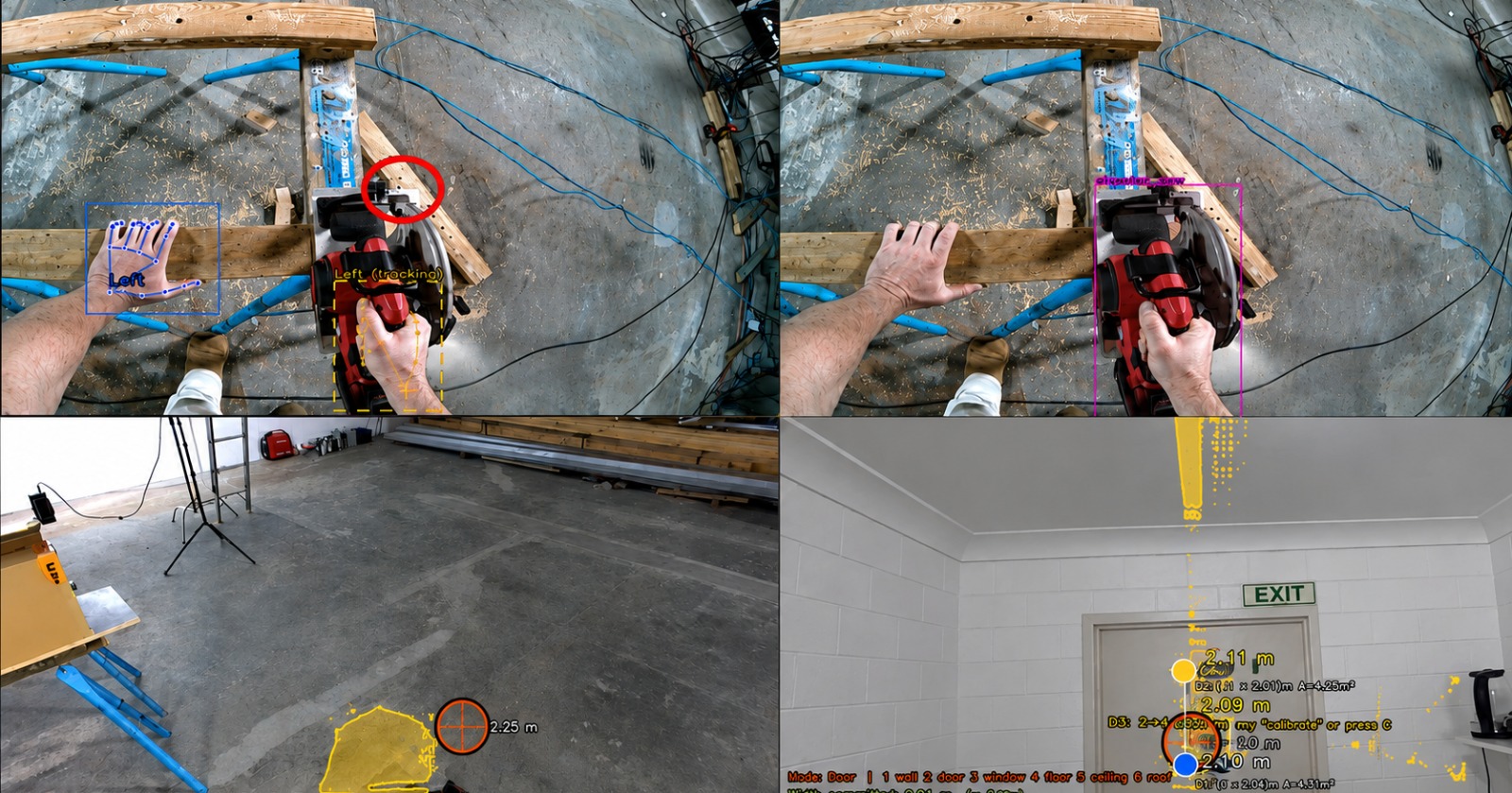
Humano Analyzer ingests time-aligns data from heterogeneous sensor sources i.e., egocentric vision, gaze tracking, depth, haptic gloves, IMUs, audio among other into a single coherent stream
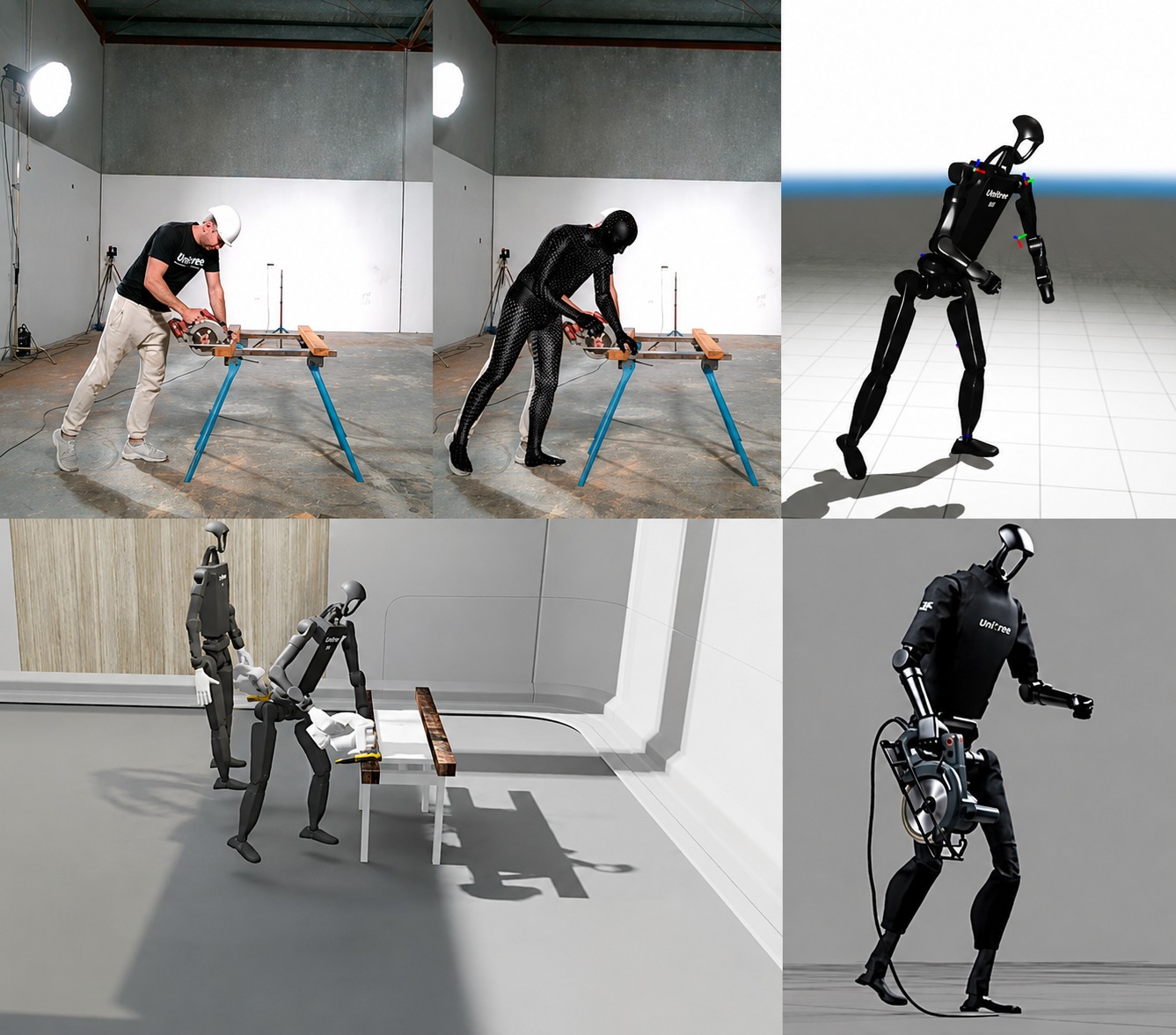
[1]. Rather than annotating raw frames, the platform organises annotation around discrete tasks and sub-tasks so that a single demonstration session is segmented into labelled reusable units suitable for downstream model training. Once dataset is captured and annotated, Humano Analyzer provides tooling to convert human demonstrations into robot-executable behaviours.
[2] Bridge-ROS2 backend exposes standard interface between Humano Analyzer data and training layers and the ROS2 ecosystem already running on most industrial and research robots so trained models, sensor streams and control commands start moving between platform and the robot's native middleware with minimal integration effort [4].
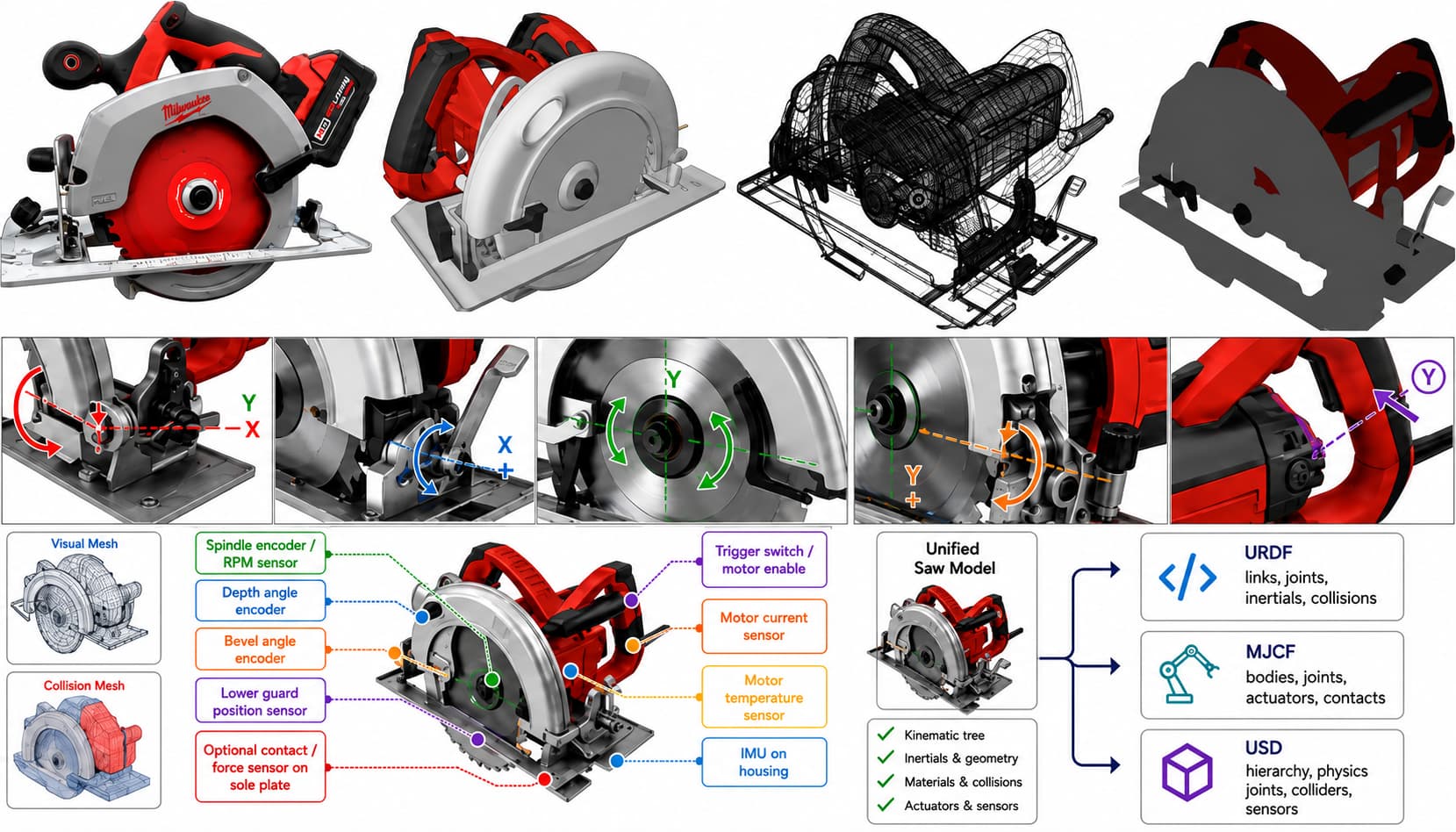
Humano Analyzer treats data collection, annotation, retargeting, training and deployment as composable modules. Process flows can be saved, versioned and reused across projects and robot platforms. Humano Analyzer physics layer is built on Featherstone articulated-body algorithm for computing forward and inverse dynamics of hosted humanoid robots [5].
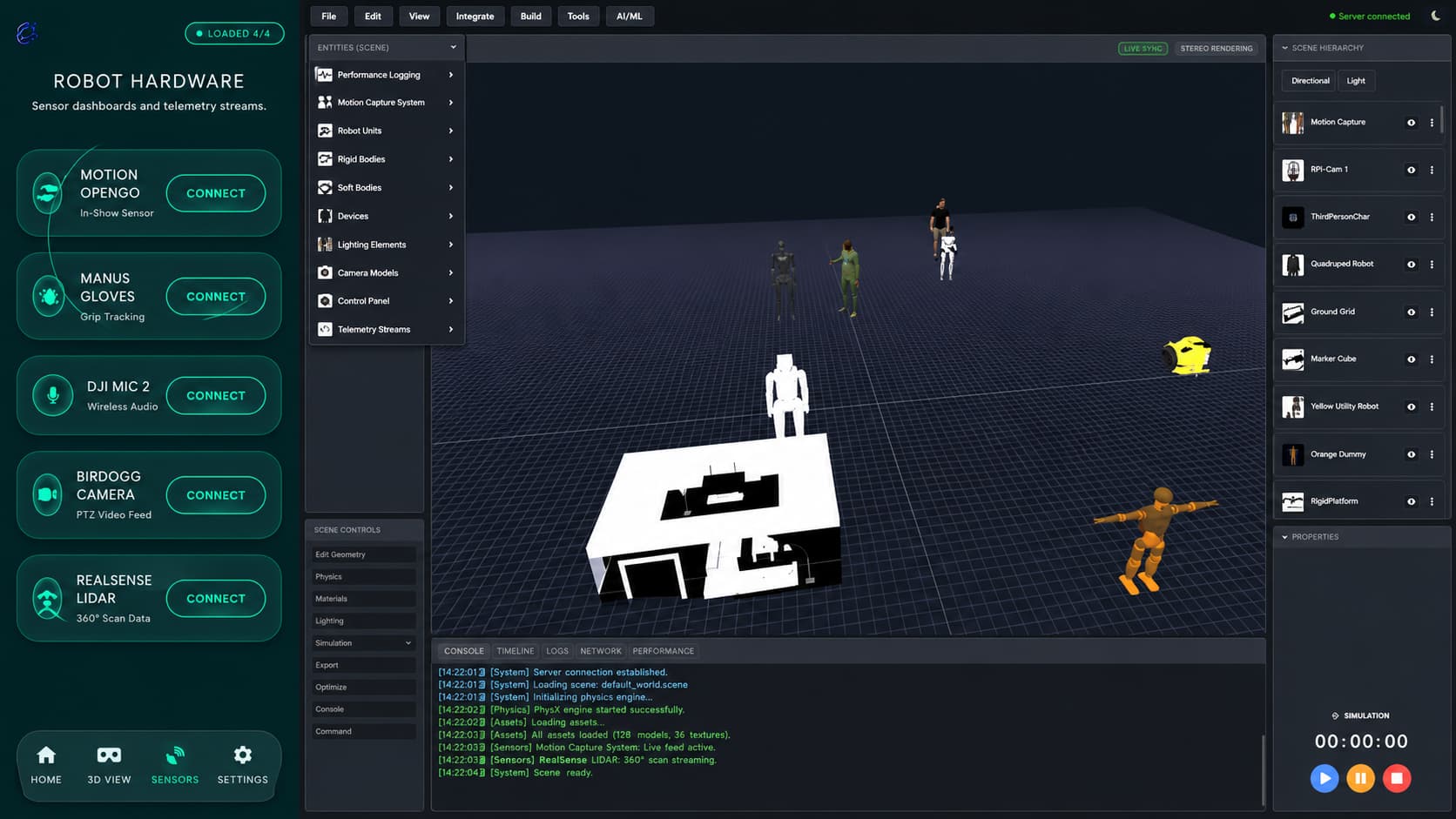
The 3D visualizer renders synchronised sensor data, robot kinematics and annotated task segments in a single interactive scene [6]. The desktop application acts as master control hub. It uses an Electron front end running a high- performance Vanilla JS and Three.js rendering pipeline. Mobile application shares lightweight high- performance web core as desktop app dynamically bridged to native mobile hardware using CapacitorJS.
To protect the software in fully offline environments, the system uses a strict RSA- SHA256 cryptographic signature model [3].